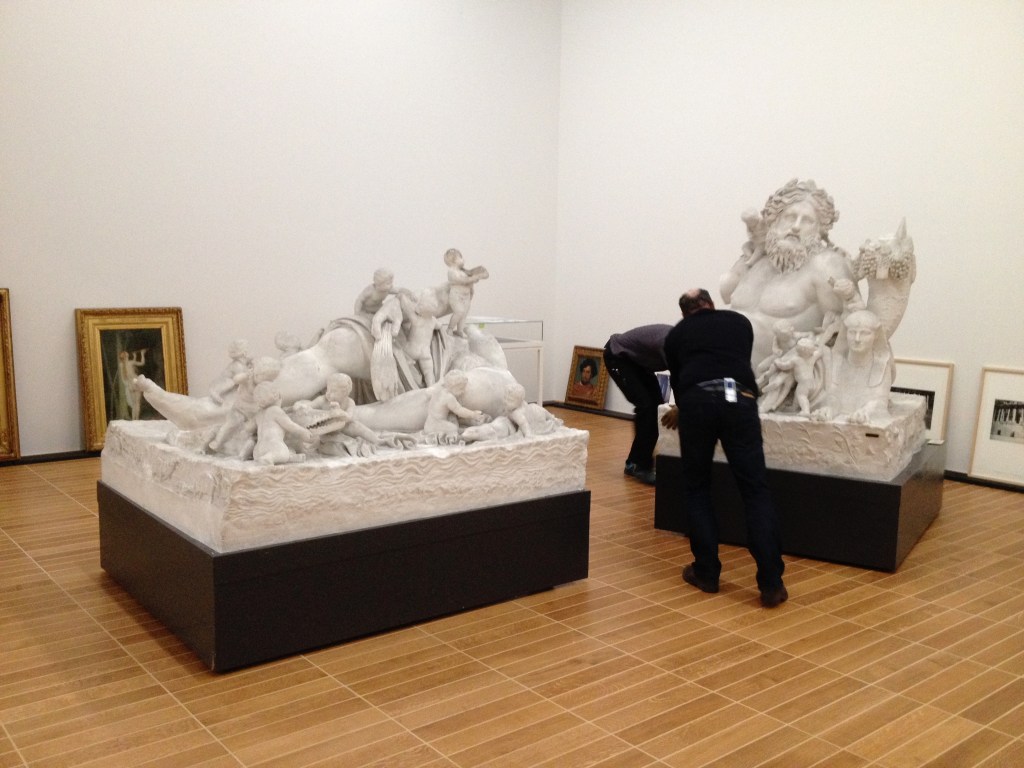
How can a renowned art collection be presented in new, surprising contexts? How can it be interwoven with the history of the city and appeal to an audience that does not necessarily consider itself an art lover? Such considerations were the starting point for the exhibition “Basel Short Stories,” which ran from February to May 2018 at the Kunstmuseum Basel. Rarely exhibited, forgotten works and icons from Basel’s public art collection were presented in nine themed rooms, each focusing on a personality, work or event related to the city of Basel. Canonical art history was deliberately set aside in favor of a freer, associative juxtaposition of artworks and documents.
Topics included Friedrich Nietzsche and his influence on surrealism and anthroposophy, the hidden similarity between the LSD synthesized by Albert Hofmann and depictions of the suffering of St. Anthony, the figure-skating couple Frick and Frack who became stars in the U.S. in the mid-20th century, the 1912 Peace Congress of the Socialist International, and the early insect researcher Maria Sibylla Merian. The unexpected constellations were enhanced by the multimedia nature of the exhibition: paintings, drawings, and sculptures were joined by advertising photographs, documentary films, and rock music.
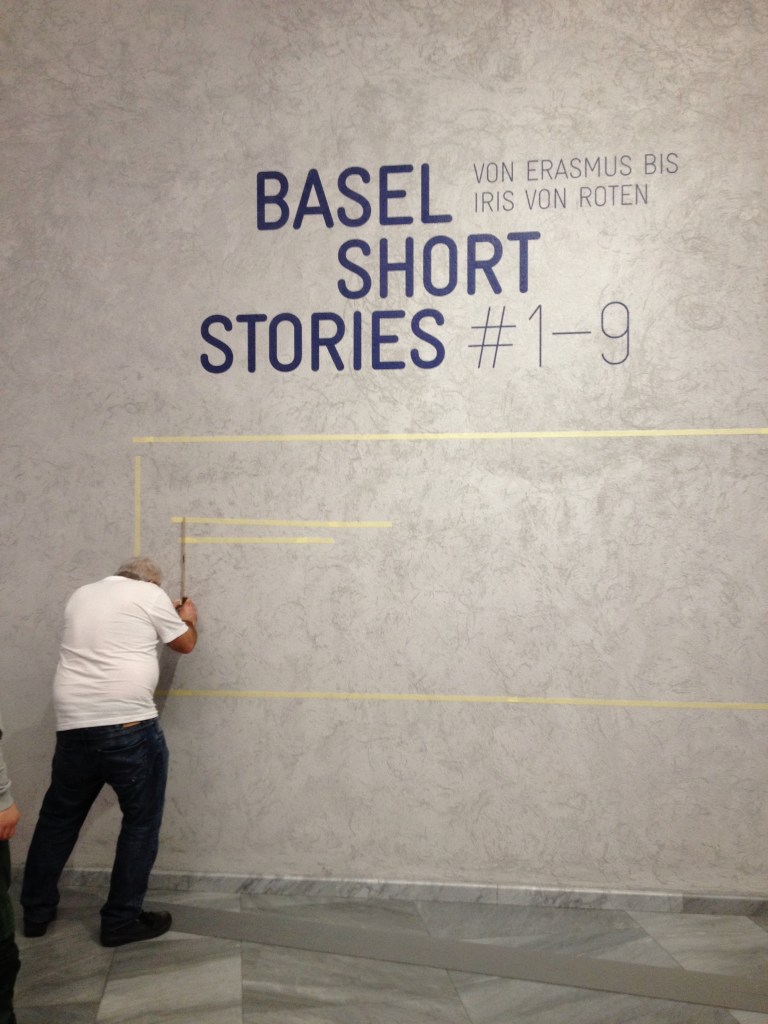
The exhibition, which I curated together with Maja Wismer and the then director Josef Helfenstein, including the publication, was my main responsibility during my time at the Kunstmuseum Basel. It was an amazing task to dive into the depths of the collection almost every day and construct these stories, mixing so-called masterpieces with lesser-known works and oddities from the past. At the opening, both visitors and museum staff used the word “refreshing” to describe the unorthodox show. And that was confirmation that we had succeeded.
For me, however, one of the most magical moments was a phenomenon that is usually invisible to museum visitors. The last days before the opening, when the exhibition finally takes shape, when after months of planning, discussing, testing, selecting, feeding databases, sending out loan requests, etc., the abstract finally begins to materialize.
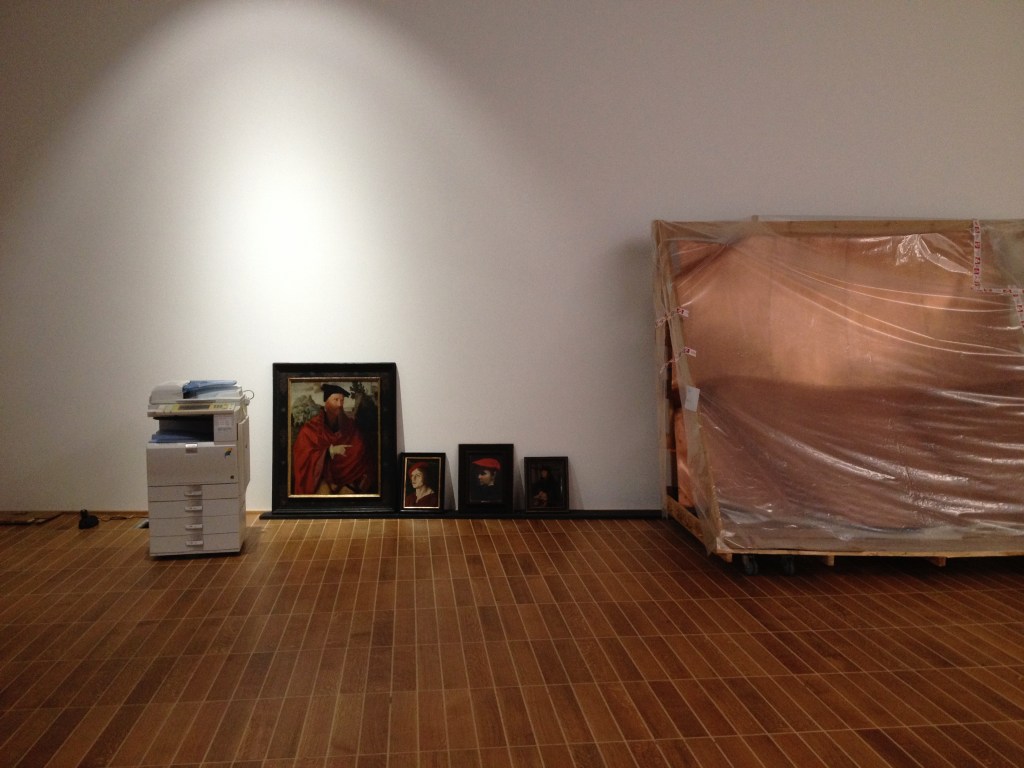
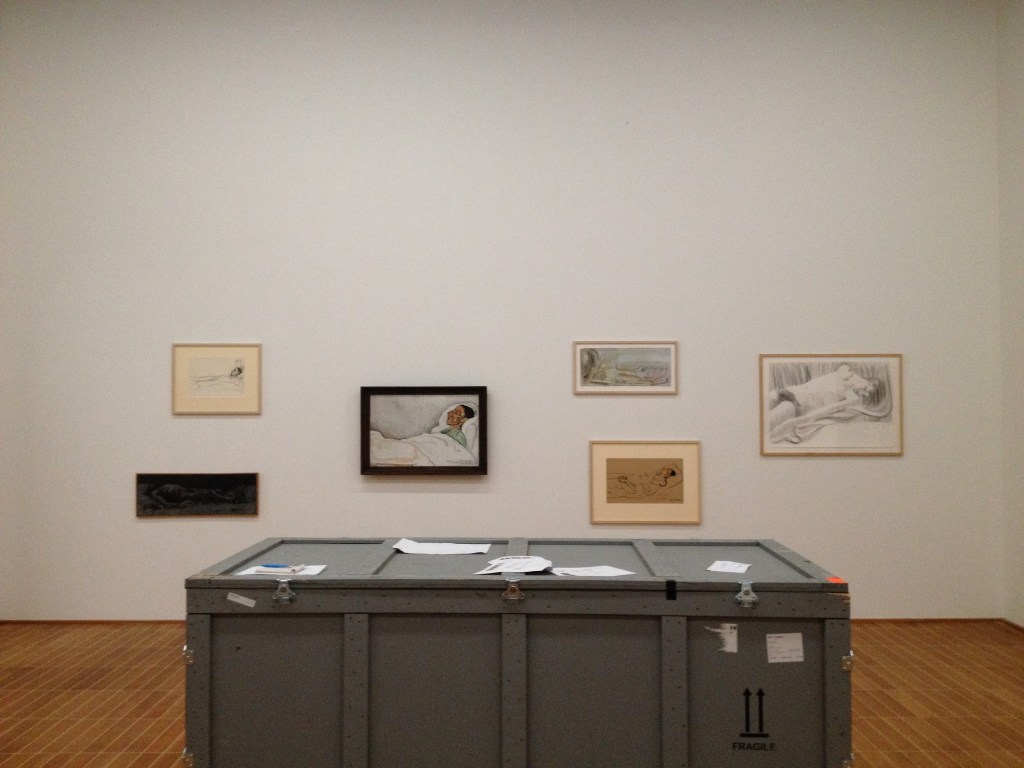
This is the rare moment when curating becomes a craft. Although it’s not the curator who acts as a craftsman/woman/person, but the art handlers. They are the silent heroes of exhibition-making, without whom no (institutional) curator could get by. They escort the artworks from their functional vaults to the hallowed exhibition spaces. They quickly measure heights, drill holes, and hang paintings and drawings. They know how to build elaborate support structures, and they often have to come up with quick, spontaneous solutions to problems that only become apparent during the installation phase.
The intensity of these final days is like a theatre play. Actors enter, mingle, and leave the stage. The multimedia team fine-tunes the sound, while the guys who apply the wall texts fix a few missing letters. A conservator from another museum watches as the loaned object is sealed under the display case. One room is nearly finished, while others are still in the making. A group of neatly framed paintings contrasts with a rough wooden crate or a sculpture wrapped in plastic. Utility and sacredness intertwine. The sounds of voices, movement, and craftsmanship evoke a bustling marketplace. And then, suddenly, there is silence.
 Patrick Düblin
Leave a comment