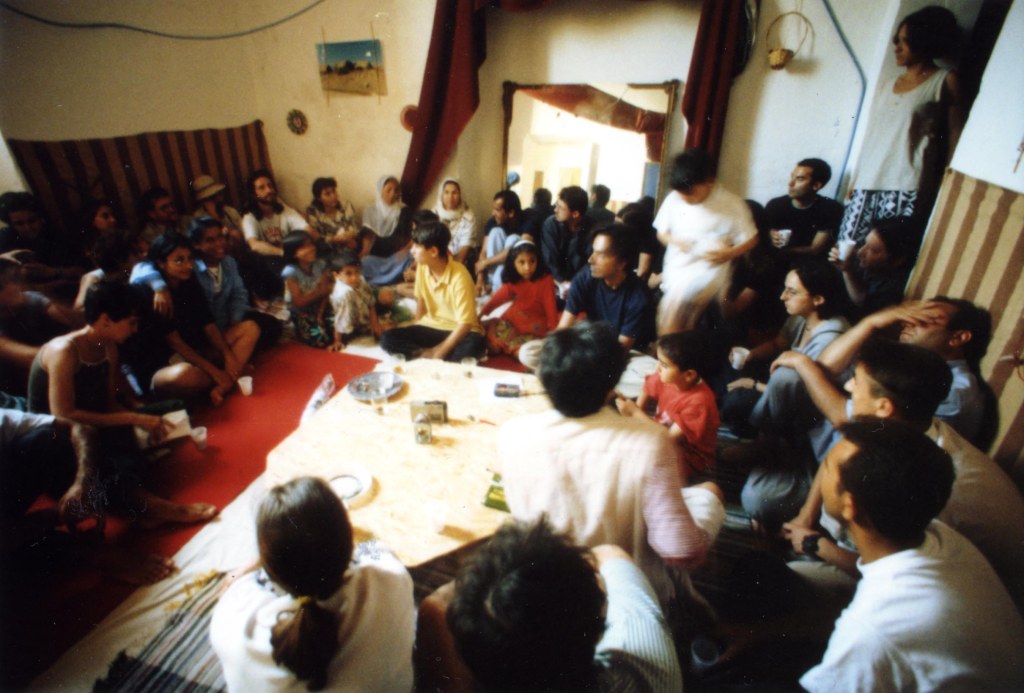
How can trespassing, radical hospitality and a proactive scepticism towards architectural education transform urban spaces and shape how a city is perceived? One possible answer is provided by my new article, ‘Climbing Over, Stepping Across: Transgression as a Lived Alternative in the Practice of Stalker‘.
In this chapter, I analyse the work of the Roman art and architecture collective Stalker. I examine how their approach to walking, trespassing and collaborating with marginalised groups constitute transgressive acts, offering an alternative approach to living and designing cities. Drawing on the work of Michel de Certeau, Georges Bataille, and Gloria Anzaldúa, the chapter contextualises Stalker’s practices within broader discourses of boundaries, taboos, and hospitality. I argue that Stalker’s work demonstrates how transgression can be a transformative, albeit transient and unstable, approach, generating alternative spatial conceptions and collective experiences that challenge architectural education, urban planning and social exclusion.
This chapter features in the book Transgression in the Architectures of After-Modernity: A Paradigm at Work in Times of Crises, edited by Carmen Popescu and published by Leuven University Press.
 Patrick Düblin
Leave a comment